
Clayton, NC and the Triangle
Hardwood Floor Repair
Board replacement, lace-in repairs, squeak elimination, water damage, and subfloor correction. We fix what other contractors say cannot be fixed. Free in-home assessment throughout the Triangle.
What We Fix
Hardwood Floor Repair Services
Not every floor that looks bad needs to be replaced. We assess every repair job honestly and recommend the approach that makes the most economic and practical sense for your specific situation.
We have been repairing hardwood floors in the Triangle since 2002. The experience to recognize what can be saved and what needs to go makes a real difference in the outcome.
Board replacement.
Individual boards or small sections that are cracked, split, badly gouged, or structurally compromised are removed and replaced. We source matching species and profile where possible.
Lace-in repairs.
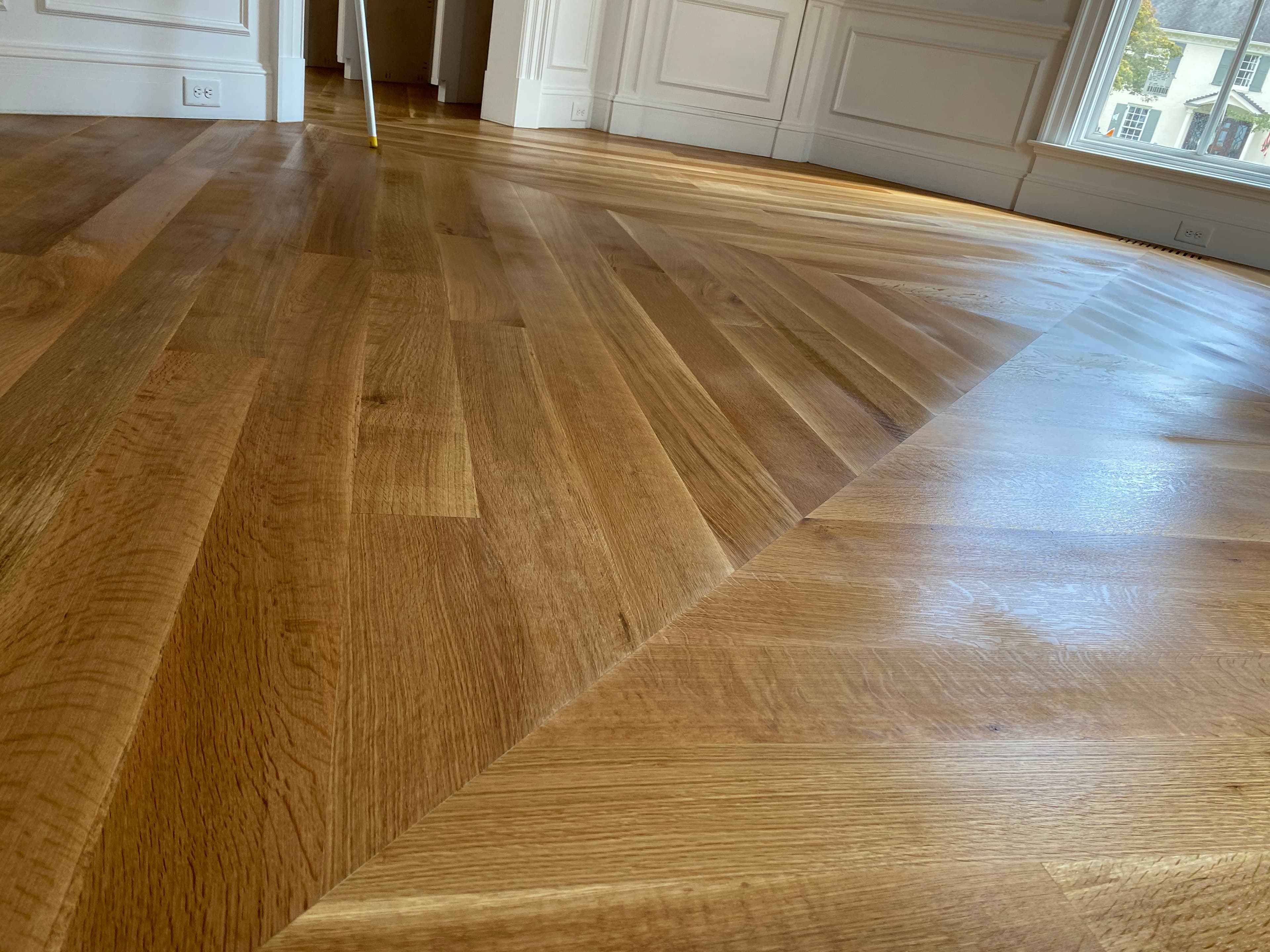
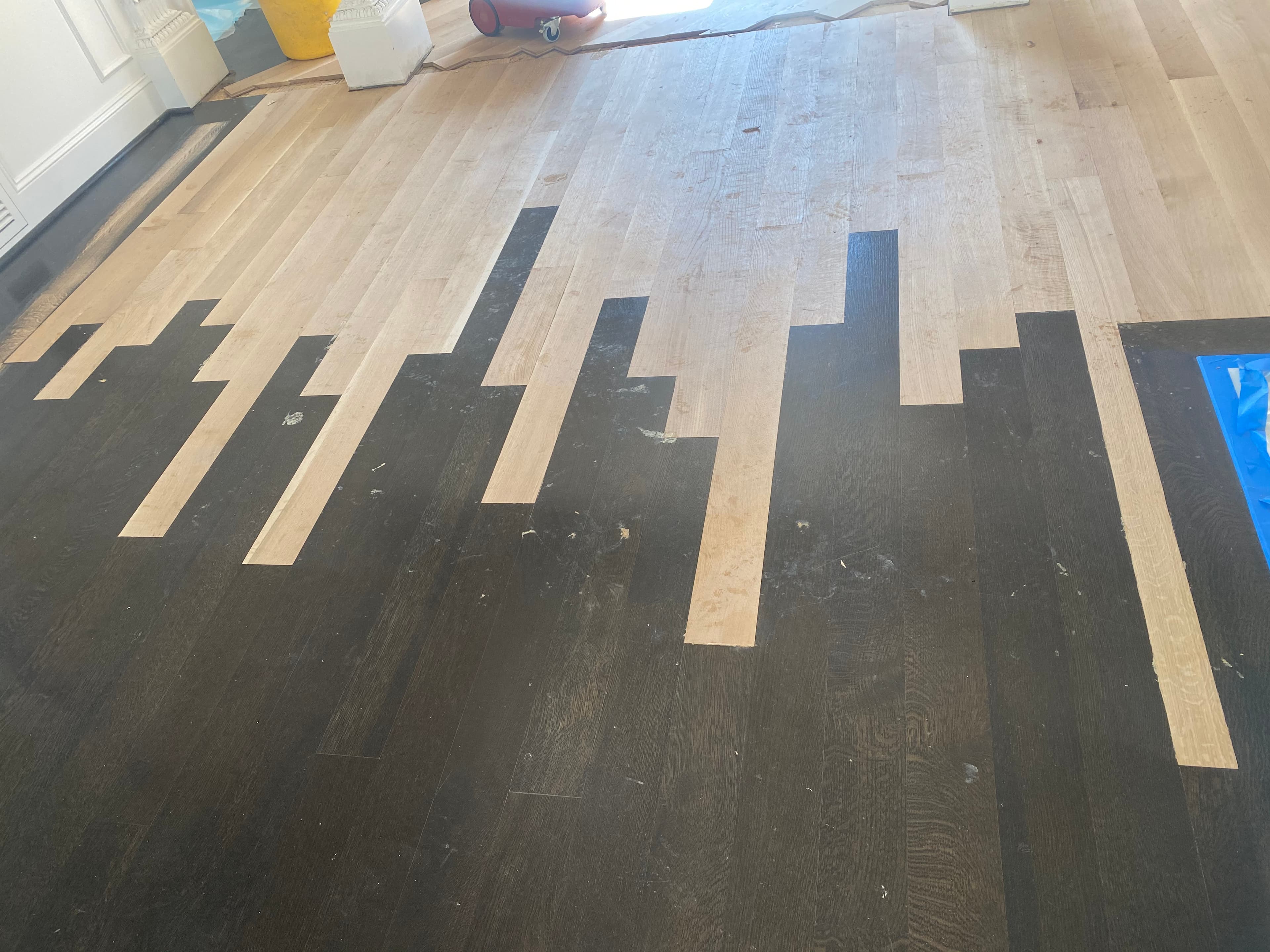
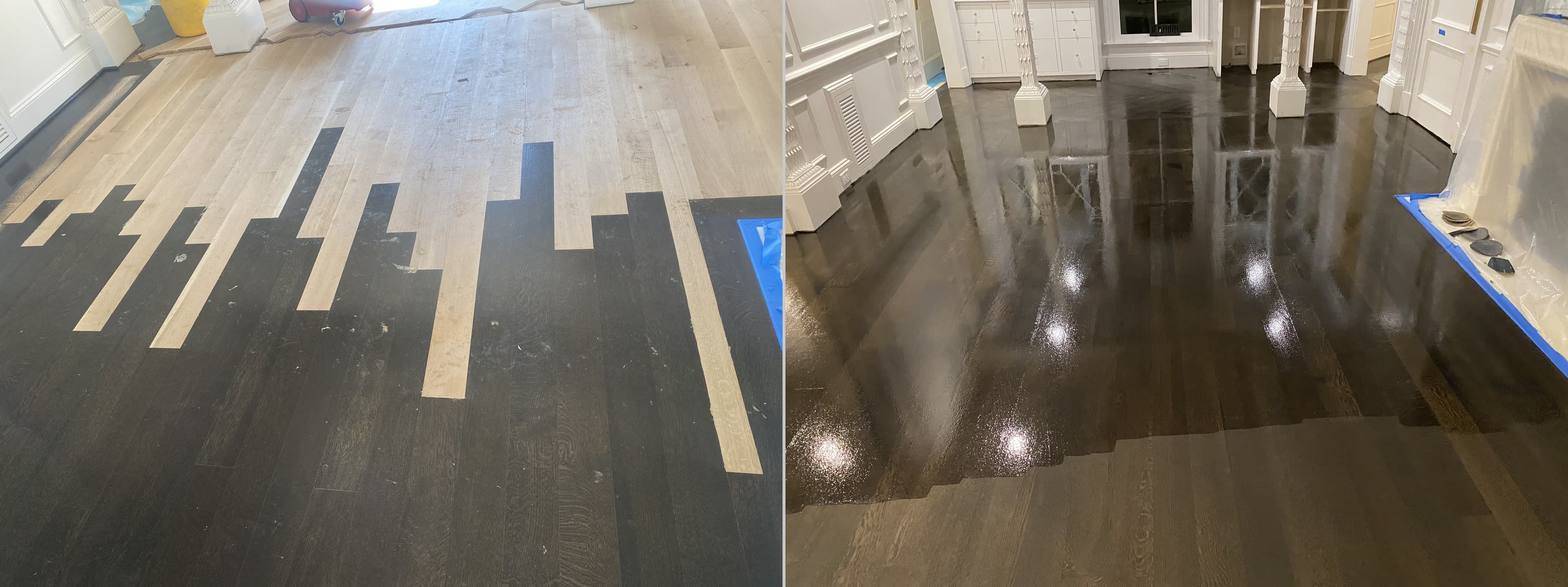
Larger damaged areas or additions require new boards to be woven into the existing floor pattern. Lace-in work requires precise cutting, fitting, and color matching to make the repair disappear.
Squeak elimination.
Squeaks caused by loose fasteners, board movement, or subfloor issues are located and corrected at the source rather than masked with a temporary fix.
Water and pet damage.
Surface staining, cupping, and discoloration from moisture or pets can often be addressed through targeted sanding and refinishing. Severe cases require board-level replacement.
Subfloor correction.
Soft spots, uneven sections, and delaminated subfloor panels are repaired or replaced before any finish floor work. A solid subfloor is the foundation of a durable result.
Color matching.
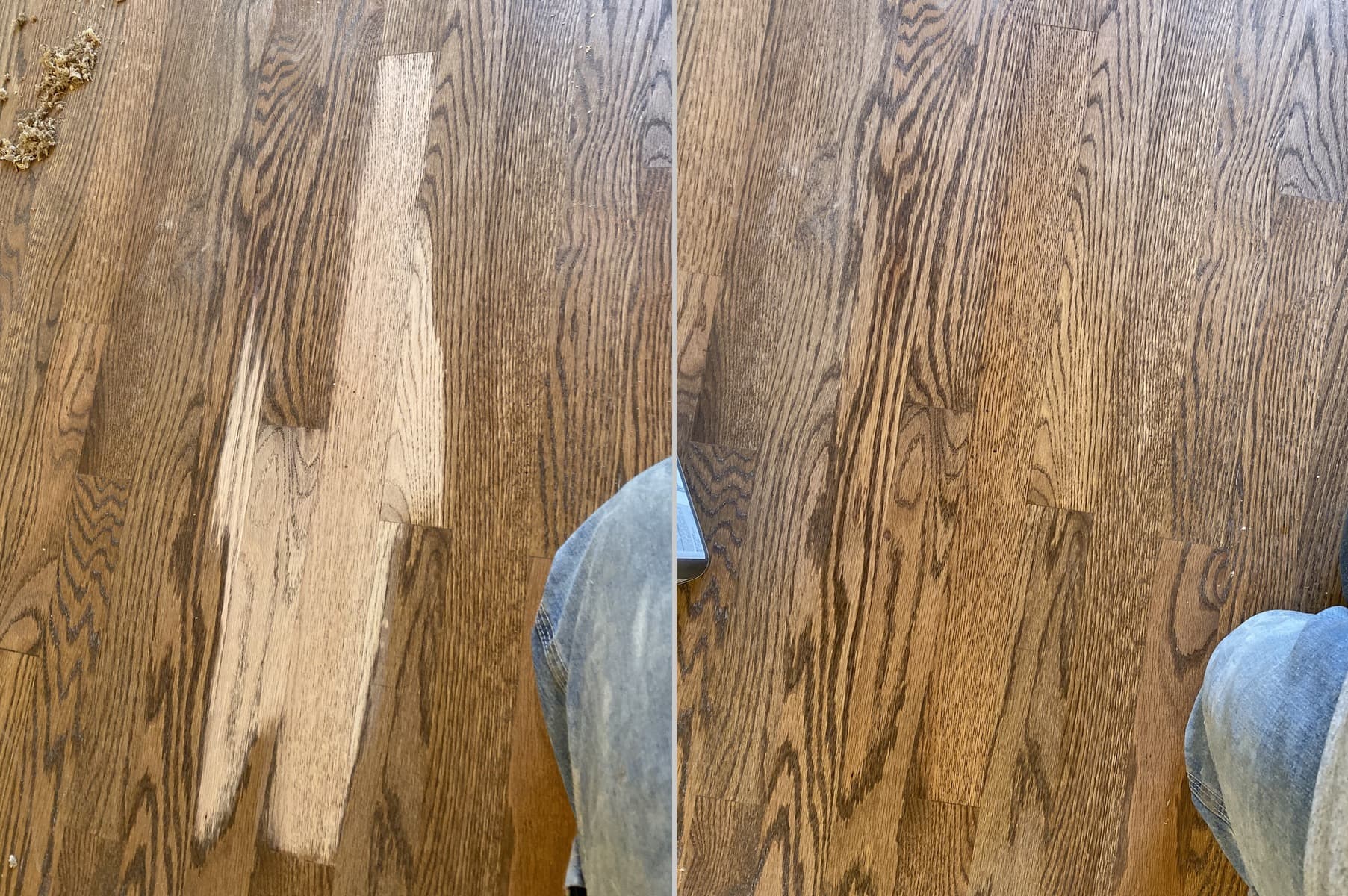
Repaired sections are stained and finished to match the surrounding floor as closely as possible. We test sample colors in your lighting before applying to the repair area.
How We Work
Our Repair Process
Free In-Home Assessment
We inspect the damage in person, probe for subfloor issues, identify the cause of the problem, and assess whether repair or replacement is the right approach. You get a written estimate before any work begins.
Source Materials
We source replacement boards that match your existing species and profile as closely as possible. For older or unusual species, we have established supplier relationships to find the right match.
Board Removal
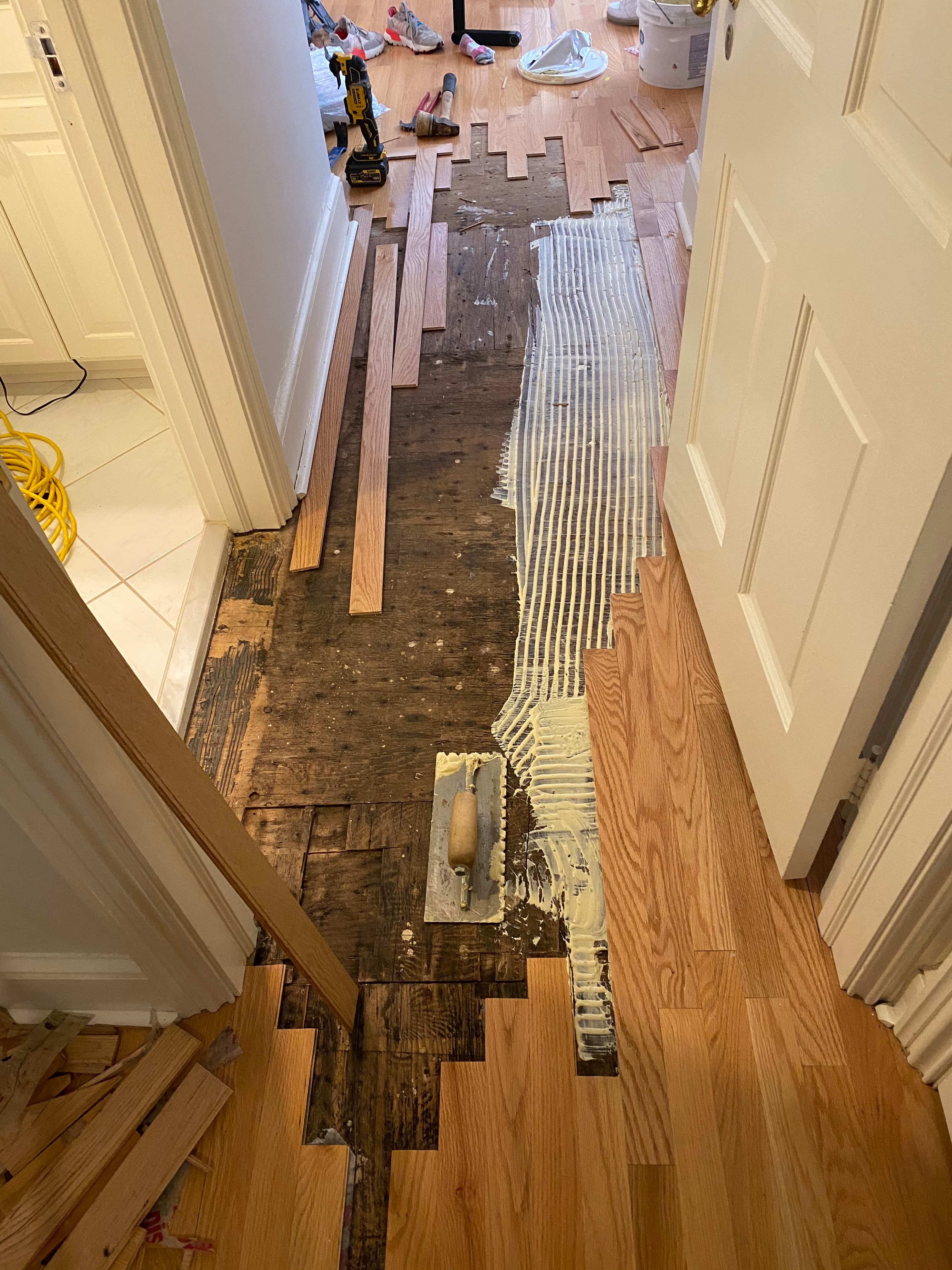
Damaged boards are carefully removed without disturbing adjacent boards where possible. This exposes the subfloor so any underlying issues can be identified and addressed before new material goes down.
Subfloor Prep and Installation
With the boards out, any subfloor issues are corrected. New boards are then installed, fastened, and secured to match the existing floor pattern. Skipping subfloor prep causes new repairs to fail prematurely.
Sanding and Blending
The repaired area is sanded to match the level and texture of the surrounding floor. For lace-in work, the entire affected zone is sanded to create a consistent surface.
Stain Matching and Finish
We apply stain samples in your lighting to achieve the closest possible color match, then finish the repair to blend with the surrounding floor.
The Honest Answer
Repair or Replace?
Repair Makes Sense When
Damage is isolated to specific boards or sections
The surrounding floor is in good structural condition
Water damage has not penetrated the subfloor
Squeaks are the primary complaint
Species and profile can be closely matched
The floor still has adequate wear layer for sanding
Replacement Makes Sense When
Damage is widespread across the majority of the floor
Structural compromise extends to the subfloor
Mold or extensive moisture damage is present
The floor has been sanded too many times already
A completely different species or style is desired
Multiple failed repairs have been attempted previously
Reputation
What Our Customers Say
Common Questions
Frequently Asked Questions
We repair board-level damage including cracks, splits, cupped boards, and water damage. We also handle lace-in repairs for missing or badly damaged sections, squeak elimination, subfloor correction, and color-matched patches so the repair blends with the surrounding floor.
A lace-in repair involves removing damaged boards and weaving new boards into the existing floor pattern. It requires skill in both installation and color matching to make the repair invisible. We assess feasibility during the free in-home visit.
Yes. Squeaks are typically caused by boards rubbing against each other, fasteners working loose, or movement between the subfloor and floor joists. We diagnose the source and apply the appropriate fix, whether from above or below depending on access.
It depends on the extent of the damage. Surface staining and minor cupping can often be addressed through sanding and refinishing. Boards that are buckled, structurally compromised, or showing mold typically need to be replaced. We assess this in person and give you an honest recommendation.
Color matching is one of the most skilled parts of floor repair. We use sample stains applied directly on the new wood in your lighting conditions, adjusting until the match is as close as possible before committing to the full repair area.
Yes. Subfloor problems including soft spots, uneven areas, delaminated plywood, and inadequate support are addressed before any new flooring is installed or repaired. Skipping subfloor prep leads to premature failure of the finished floor.
We will give you an honest answer. If a floor has isolated damage and the surrounding boards are in good shape, repair is almost always the better value. If damage is widespread or the floor has been repaired multiple times already, we will tell you that replacement makes more sense.
Yes. Historic hardwood repair is work we take seriously. Original heart pine, property-milled pine, and old-growth hardwood found in Johnston County and Triangle historic homes require careful assessment before any repair work begins. These floors have limited wear layers and cannot tolerate the same approach as modern hardwood. We assess historic floors for board integrity, wear layer depth, and previous repairs before recommending a path forward. In some cases, stabilization and recoating is the right answer. In others, targeted board replacement with species-matched material is possible. We give you an honest assessment of what the floor can handle.
Ready to Get Started?
Get Your Free Estimate Today
Serving Clayton, Garner, Raleigh, Cary, and communities throughout Johnston, Wake, and Durham Counties. Call or fill out the form and we'll get back to you within one business day.
Where We Work
Serving the Triangle Since 2002
Based in Clayton, NC. We travel throughout Johnston, Wake, and Durham Counties. Call to confirm your specific location.
Johnston County
Home Base- Clayton
- Garner
- Smithfield
- Selma
- Four Oaks
- Benson
- Kenly
- Princeton
Wake County
- Raleigh
- Cary
- Apex
- Fuquay-Varina
- Holly Springs
- Wake Forest
- Knightdale
- Morrisville
Durham County
- Durham
- Chapel Hill
- Hillsborough
Don't see your city? Call us. We consider jobs outside these areas on a case-by-case basis, particularly for larger projects.
(984) 400-4OAKGet Started
Not Sure What Your Floors Need?
Schedule a free in-home assessment and we will give you an honest evaluation of the damage, what it will take to fix it, and what it will cost.
113 State Ave #103 · Clayton, NC 27520 · Mon-Fri 9am-4pm · By appointment only · Sat-Sun closed