
Clayton, NC and the Triangle
LVP Flooring Installation
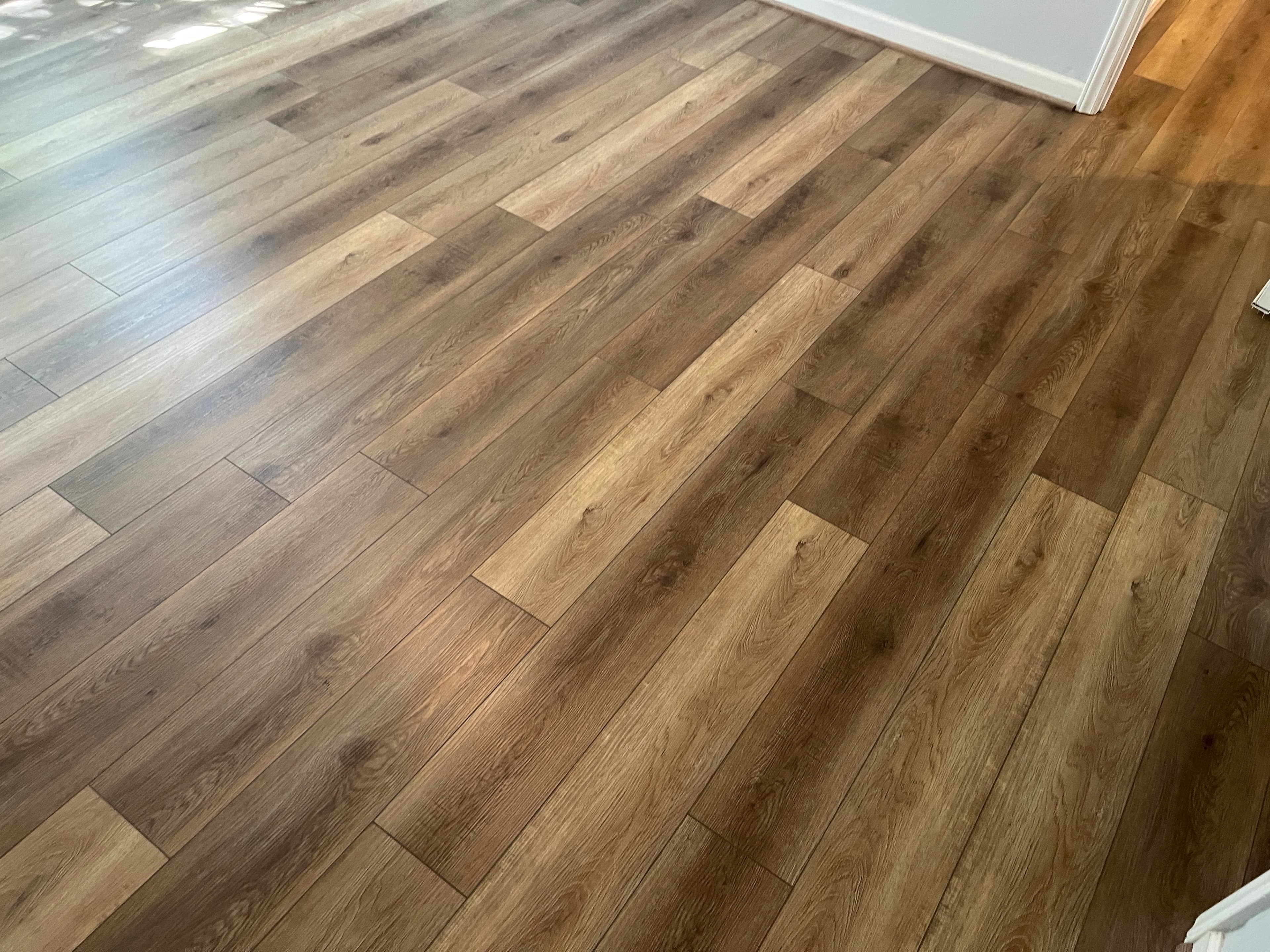
Luxury vinyl plank installation done right. Moisture testing on every job. Floating and glue-down methods. All subfloor types. The durability and water resistance of LVP with the craftsmanship of a hardwood specialist.
Why LVP
The Practical Alternative to Hardwood
LVP delivers the look of hardwood in areas where solid wood is not practical. Bathrooms, basements, kitchens, and high-traffic spaces all benefit from LVP's waterproof core and durable wear layer.
Installation quality matters as much with LVP as it does with hardwood. Improper moisture testing, uneven subfloors, and incorrect installation methods cause failures that are entirely avoidable with proper prep.
100% waterproof.
LVP is not affected by moisture the way hardwood or laminate can be. It is the right choice for kitchens, bathrooms, laundry rooms, and basements.
Durable wear layer.
Modern LVP products feature wear layers rated for heavy residential or light commercial use. Scratch and dent resistance makes it well-suited for households with pets and children.
Realistic hardwood look.
Embossed-in-register technology aligns the texture of the plank with its printed grain pattern, producing a look that closely mimics real hardwood.
Comfort underfoot.
Many LVP products include an attached underlayment that adds cushion and reduces sound transmission compared to a hard surface floor without padding.
How We Work
Our Installation Process
Free In-Home Estimate
We measure the space, assess the subfloor, perform moisture testing, and discuss product options. You receive a written estimate covering materials, labor, and subfloor prep if needed.
Subfloor Preparation
Any high spots are ground down and low spots are filled to achieve the flatness required for a stable installation. Moisture barriers are applied if moisture readings exceed product specifications.
Layout Planning
We plan the plank layout to minimize waste, ensure balanced cuts at walls, and handle transitions between rooms or elevation changes cleanly.
Installation
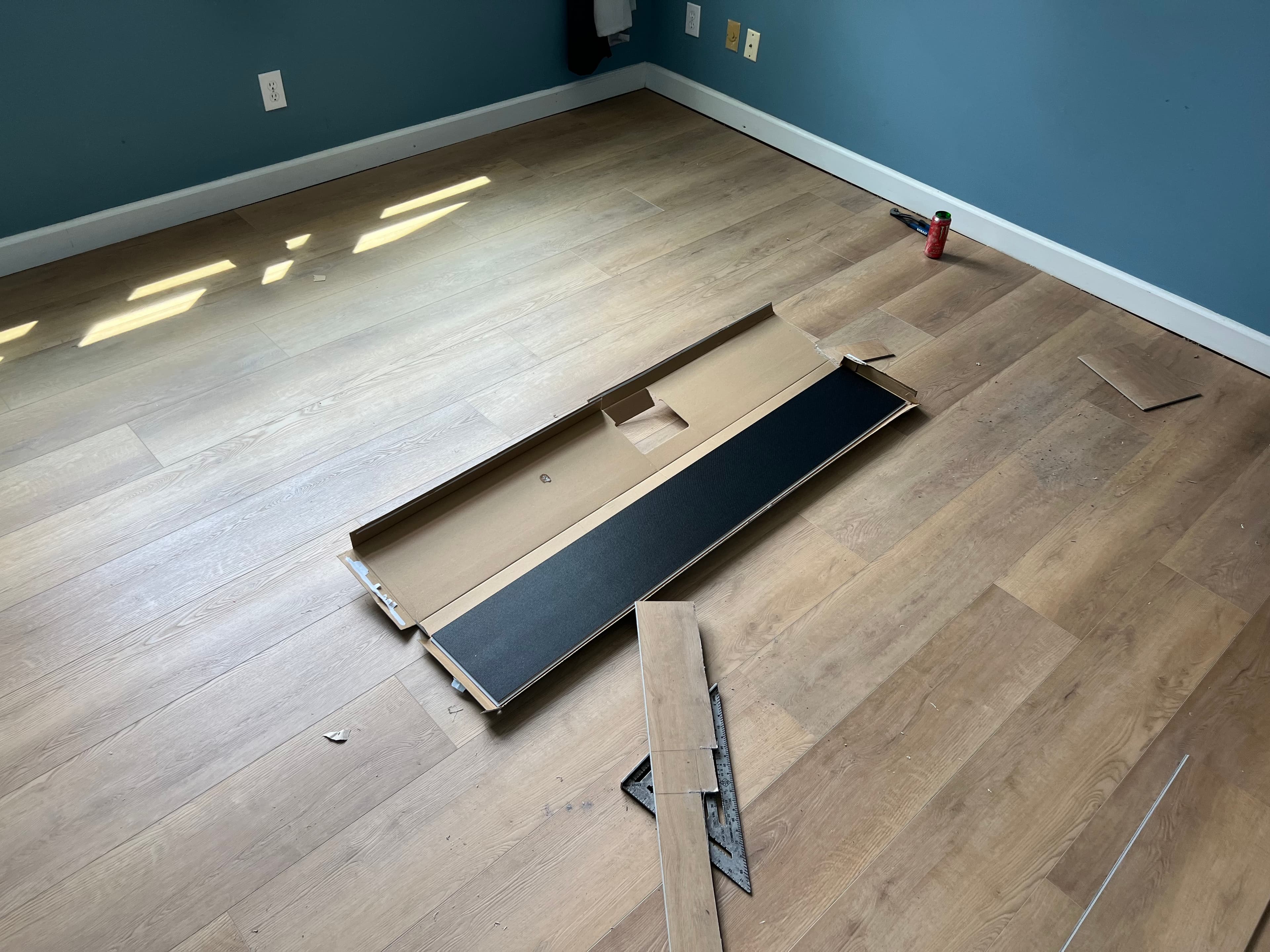
Planks are installed using the method appropriate for your product and subfloor: floating click-lock or full-spread glue-down. Expansion gaps are maintained at all walls and fixed vertical surfaces.
Transitions and Trim
Transition strips, thresholds, and base molding are installed to complete the installation. We match transitions to the floor profile and finish the perimeter cleanly.
Final Inspection
We walk the entire floor looking for any planks that are not fully locked, transition issues, or visible defects. We do not leave until the installation is complete and correct.

Waterproof Flooring
The Only Truly Waterproof Floor Available
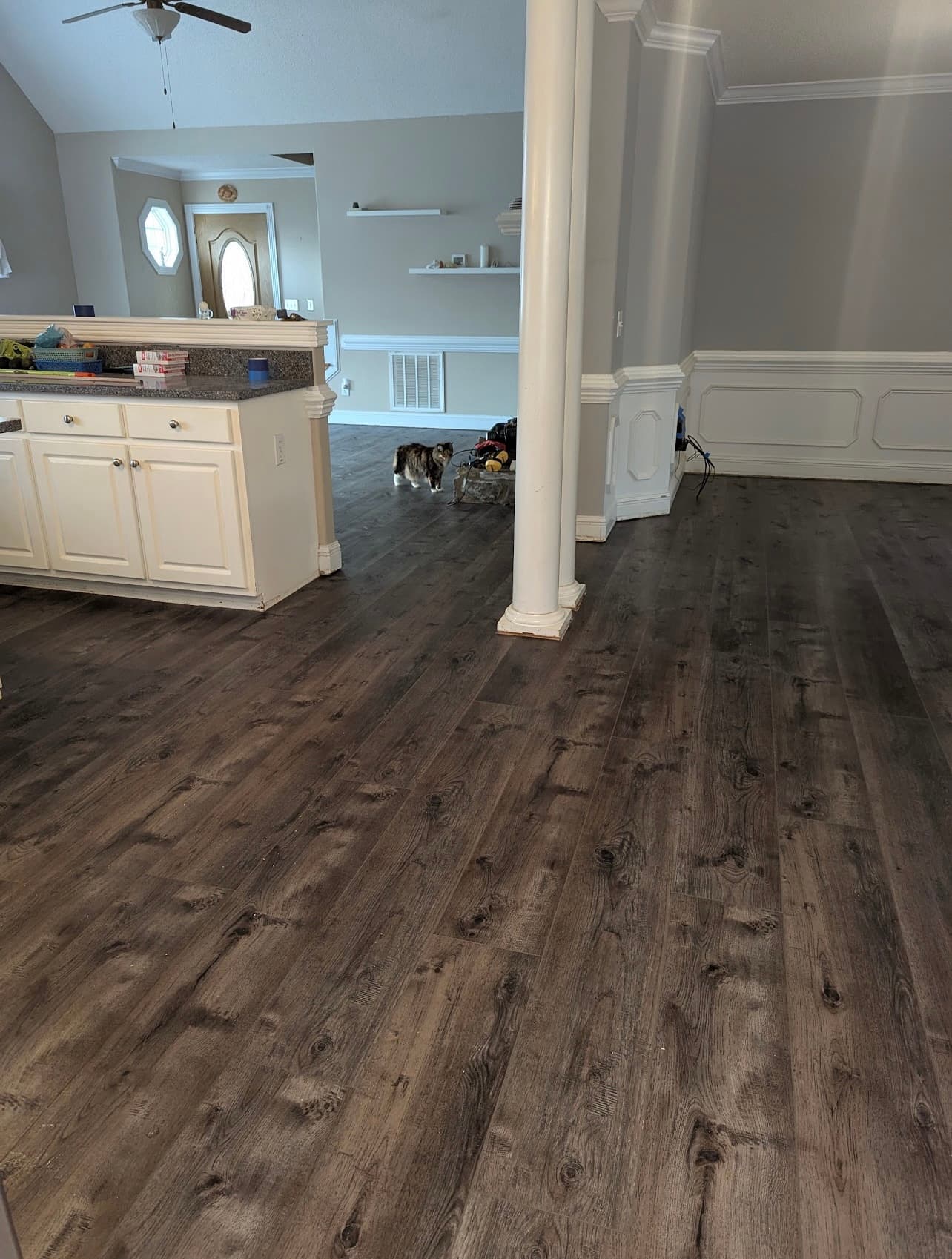
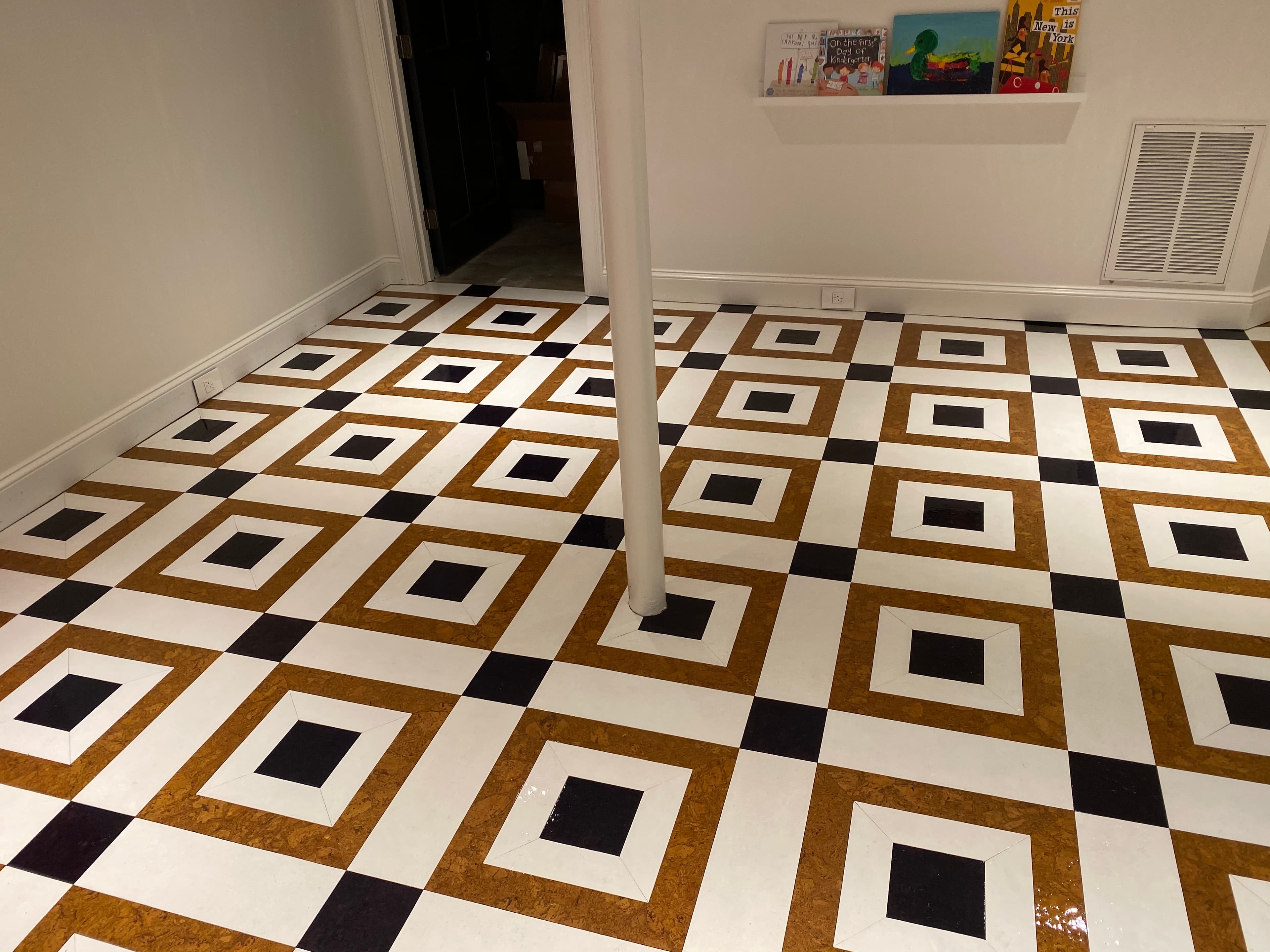
LVP is 100% waterproof through its entire thickness. Not water-resistant. Not moisture-tolerant. Waterproof. That distinction matters in kitchens, bathrooms, laundry rooms, basements, and any space where water is a real possibility. Hardwood swells with sustained moisture exposure. Laminate has a wood-fiber core that fails when wet. LVP has neither of those vulnerabilities.
In the Triangle, where humidity cycles are real and finished basements are common, LVP is often the right answer for below-grade and moisture-prone spaces. We install it over concrete slabs, existing subfloors, and in areas where solid hardwood is not viable.
The waterproof claim only holds, however, if the installation is done correctly. Moisture in the subfloor below the LVP, not from above, is the most common cause of LVP failure. We test subfloor moisture on every waterproof flooring installation before any product goes down.
Kitchens and bathrooms.
The most common application. LVP handles spills, splashes, and the humidity fluctuations that come with water-heavy rooms without the expansion issues that affect wood-core products.
Finished basements.
Below-grade spaces are not candidates for solid hardwood and are risky for laminate. LVP installed over a properly prepared and moisture-tested concrete slab is the most durable, waterproof option available for finished basement floors.
Subfloor moisture testing first.
Waterproof flooring on top of a wet subfloor still fails. We test subfloor moisture with a Tramex MEX5 pinless meter and Delmhorst Total Check pin meter before every installation. If moisture levels are elevated, we address the source before any product goes down.
SPC vs WPC core.
Stone Plastic Composite (SPC) cores are denser and more dimensionally stable than Wood Plastic Composite (WPC) cores. SPC is our recommendation for basements, kitchens, and high-traffic areas. WPC offers a softer feel underfoot and works well in bedrooms and above-grade spaces.
Choosing the Right Floor
LVP vs. Hardwood
LVP
100% waterproof core
Lower cost per square foot
Suitable for basements and below-grade areas
Cannot be sanded or refinished
Faster installation
Ideal for kitchens, baths, and laundry rooms
Hardwood
Natural wood, unique grain in every board
Can be sanded and refinished multiple times
Adds long-term resale value
Requires humidity and moisture control
Above-grade installation only for solid hardwood
Higher cost but a lifetime floor when cared for
Reputation
What Our Customers Say
Common Questions
Frequently Asked Questions
LVP stands for luxury vinyl plank. It is a multi-layer synthetic flooring product designed to replicate the look of hardwood while offering superior water resistance and durability. It is a strong choice for areas where solid hardwood is not practical, such as basements, bathrooms, or homes with heavy moisture.
LVP can be installed using a floating method, where planks click together without being fastened to the subfloor, or a glue-down method for a more permanent installation. We assess your subfloor conditions, moisture levels, and the specific product you have selected to recommend the right method.
Yes, moisture testing is performed on every job before installation begins. Excess moisture in the subfloor is one of the most common causes of LVP failure. We test and address any moisture issues before any flooring goes down.
In some cases, yes. LVP can often be installed over a sound, flat existing floor if height transitions and door clearances are not a concern. We assess the existing floor during the free in-home visit to determine if it is a viable substrate.
LVP is 100% synthetic and waterproof. Laminate has a wood-fiber core that can swell with prolonged moisture exposure. LVP is the better choice for kitchens, bathrooms, and basements. Laminate can be an excellent choice in dry, above-grade living areas.
Installation time depends on square footage, subfloor condition, and the complexity of the layout. Most residential LVP projects are completed in one to three days. We will give you a specific timeline during the free estimate.
LVP can be installed over concrete slabs, plywood subfloors, and OSB. The key requirements are that the subfloor is structurally sound, flat to within 3/16 inch over 10 feet, and within acceptable moisture limits. We correct any flatness or moisture issues before installation.
WPC (Wood Plastic Composite) and SPC (Stone Plastic Composite) are the two main LVP core types. WPC has a foamed composite core that is thicker and softer underfoot, with better sound absorption, making it a good fit for above-grade living spaces where comfort and acoustics matter. SPC has a denser, stone-based core that is harder, thinner, and significantly more dimensionally stable under temperature swings. SPC is the better choice for below-grade installs, spaces with radiant heat, or areas that see wide temperature variation. Both are 100% waterproof. The right choice depends on your specific room, subfloor type, and how the space is used. We walk you through it during the free assessment.
Ready to Get Started?
Get Your Free Estimate Today
Serving Clayton, Garner, Raleigh, Cary, and communities throughout Johnston, Wake, and Durham Counties. Call or fill out the form and we'll get back to you within one business day.
Where We Work
Serving the Triangle Since 2002
Based in Clayton, NC. We travel throughout Johnston, Wake, and Durham Counties. Call to confirm your specific location.
Johnston County
Home Base- Clayton
- Garner
- Smithfield
- Selma
- Four Oaks
- Benson
- Kenly
- Princeton
Wake County
- Raleigh
- Cary
- Apex
- Fuquay-Varina
- Holly Springs
- Wake Forest
- Knightdale
- Morrisville
Durham County
- Durham
- Chapel Hill
- Hillsborough
Don't see your city? Call us. We consider jobs outside these areas on a case-by-case basis, particularly for larger projects.
(984) 400-4OAKGet Started
Ready to Install New Floors?
Contact us to schedule a free in-home estimate. We will assess your subfloor, discuss product options, and give you a written estimate with no surprises.
113 State Ave #103 · Clayton, NC 27520 · Mon-Fri 9am-4pm · By appointment only · Sat-Sun closed